
Sourcing combustion equipment overseas is usually decided on unit price and usually regretted on something else. The gap between a good purchase and an expensive one rarely shows up on the quotation. It shows up eighteen months later, when a fitting is unavailable, a controller is discontinued, or nobody will answer the phone about a commissioning fault.
Match to the process before comparing quotations
The most expensive sourcing mistake is comparing packages that were scoped for different jobs. Once a supplier is working from a proper process brief, the conversation becomes concrete: which firing mode, which fuel, which available pressure, which emission requirement, and what the control has to interface with.
If two quotations are both for a gas burner package answering the same brief, comparing them is meaningful. If one is scoped for a different duty, the price gap is measuring scope, not value. Writing the process brief down before asking for prices removes most of that ambiguity, and it is work the buyer has to do regardless of which supplier ends up quoting.
Documentation is the part you can check cheaply
Ask for documentation before asking for a discount, because documentation reveals most of what you need to know and costs nothing to request. The useful items are the gas train schematic, the electrical and control drawings, the declared gas type and pressure range, the burner technical data, and a parts list with real part numbers. Drawings that exist and match the assembly are the cheapest reliability signal available.
Ask specifically about standards conformity for the destination market, and expect the answer to be about the market rather than a generic list. A package documented for one region is not automatically acceptable in another, and the electrical requirements in particular tend to be market specific. Where a package must satisfy a local requirement, you want to see that addressed rather than assumed.
Spare-part continuity is the part that actually decides the outcome
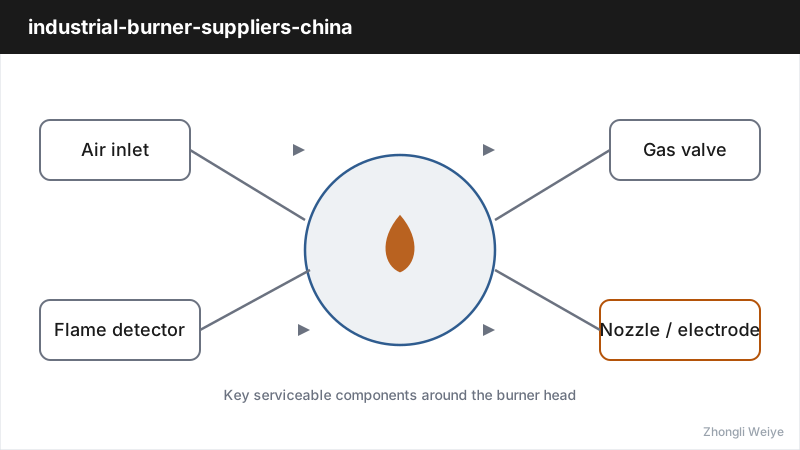
Combustion equipment has a long tail of small parts. Ignition electrodes, thermocouples, gas valves, pressure switches, flame sensors and controllers are individually cheap and individually indispensable. A burner that arrived with everything and is missing one of those a year later is not a spare-parts problem, it is a downtime problem.
So the question is not whether spares can be supplied. It is whether the same part will still be supplied in five years, at a known price, to the specification you installed. Fittings are part of this: when a burner fitting is specified by a drawing number that is not reproduced anywhere, replacing it later becomes a trial-and-error exercise. Catalogue availability in the early years is much less informative than a documented part number.
Commissioning support decides how long commissioning takes
Commissioning is where supplier quality becomes obvious, and the variable is not willingness but presence. Ask who attends commissioning, what documentation they work from, and what happens when a fault does not match anything in the manual. A supplier who arrives with a written commissioning procedure and a named contact resolves problems in hours. One who does not turns a two-day job into two weeks.
Remote support has improved considerably and can carry a straightforward commissioning on its own. It is weaker for the first fault on an unfamiliar installation, and weaker still for anything involving gas train sequencing. Knowing in advance which of those situations you are in is worth a line in the purchase agreement.
References and the questions worth asking them
Any serious supplier can provide references. The value comes from the questions you ask, not from the contact list. Ask a reference about the faults, not about the relationship. What went wrong in the first year, how long was the worst downtime, how responsive was support when something failed, and what would they change about the package. References given the choice will be positive, and the answers to those four questions are usually where the useful detail lives.
Price still matters and should be compared like with like. What matters is comparing packages that answer the same brief, with the same documentation scope and the same spares commitment, over the same horizon. A cheaper package with no spare-part commitment is not cheaper.
Frequently asked questions
What should I check before buying an industrial burner from an overseas supplier?
Start with documentation: gas train schematic, control and electrical drawings, declared gas type and pressure range, technical data, and a parts list with real part numbers. Then establish spare-part continuity and commissioning support in writing. Those three checks reveal most of what matters and cost nothing to request.
Why does spare-part continuity matter so much?
Because small parts are individually cheap and individually indispensable. The question that counts is not whether spares can be supplied now, but whether the same part will still be available in five years at a known price to the specification you installed. A missing flame sensor is a downtime event, not a maintenance detail.
Should price decide the purchase?
Price decides between comparable packages, not between different ones. Compare quotes that answer the same process brief, with the same documentation scope and the same spares commitment. Once those match, price is a fair basis for the decision.
How do I verify a supplier's references?
Ask about faults rather than about the relationship. What went wrong in the first year, how long was the worst downtime, how responsive was support when something failed, and what would they change. A reference given the choice will be positive, and these four questions are where the useful detail sits.
Does remote commissioning support work?
For a straightforward installation it can work well. It is weaker for the first fault on an unfamiliar setup and weaker still for anything involving gas train sequencing. Knowing which situation you are in before purchase is worth a line in the agreement.
How should standards conformity be handled?
Ask about the destination market specifically, rather than accepting a generic list. Documentation written for one region is not automatically acceptable in another, and electrical requirements in particular tend to be market specific.
Request a quote
If you send a written process brief, the quotation you get back will be comparable with anyone else's, which is the point. Include the fuel, the available pressure range, the firing mode, the emission requirement and what the control has to interface with. If your situation is a spares or replacement question rather than a new project, saying so is equally useful.
Related products
The parts and product families referenced in this guide: