
A regenerative burner recovers exhaust heat by running two burners out of phase. While one fires, the other sits in the exhaust stream and stores that heat in a ceramic bed; then the beds swap and the stored heat arrives as preheated incoming air. The arrangement is common on high-temperature furnaces because the recoverable energy at those temperatures is large enough to justify the extra valves and control complexity.
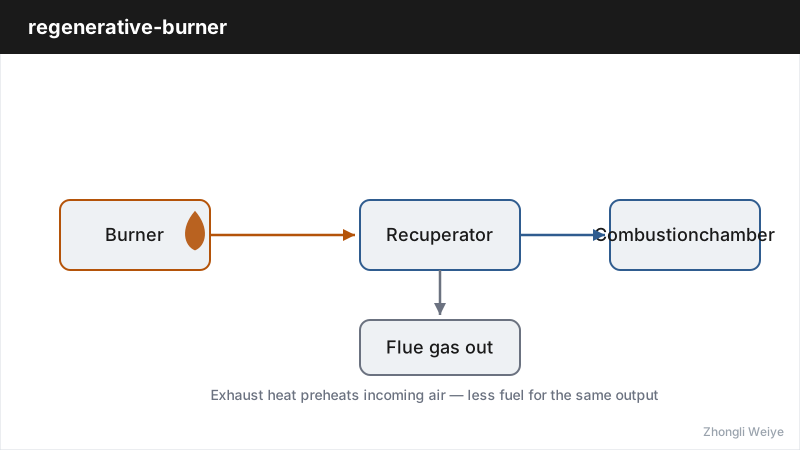
What the paired bed actually recovers
The gain comes from the temperature difference across the bed, so it scales with process temperature. A furnace running at moderate temperatures sends relatively cool exhaust up the stack, and the recoverable fraction is small because there is not much energy above the surrounding temperature to take. Push the same furnace into the range where steel, aluminium and glass are worked, and the exhaust carries a substantial recoverable load, which is why regeneration is specified where it is.
Because air arrives at the burner already hot, the burner needs less of its own combustion air volume to reach flame temperature. That changes the sizing logic for the whole air side. A gas burner that would need a large forced air supply on cold air may need considerably less once preheat is available, and the damper actuator range has to cover the resulting control authority rather than the old open position.
Reversal timing decides whether recovery is real
The switching valves have to move at the right moment in the cycle. Flip too early and the incoming air is preheated but the exhaust has not given up its heat yet. Flip too late and the exhaust loses more to the stack than the design assumed, which lowers efficiency without warning. Timing that drifts is worse still, because the two burners end up with unequal preheat and the load sees a temperature swing.
This is a job for a controller that sequences the cycle and proves each step. The solenoid valves driving the beds need the same closing speed and seat tightness the main gas train expects, since a valve that closes late in the reversal is a control fault as much as a safety one. More detail on how switching valves behave in service sits in the gas train component guide.
What preheated air does to the flame
Higher air temperature changes combustion behaviour in ways that need to be planned rather than discovered. Flame length tends to shorten because less of the energy goes into heating the incoming stream, and low-NOx techniques that depend on late fuel injection or a staged air split have to be re-tuned against the new preheat condition. A burner tuned for cold air will not hold its air to fuel ratio once the air is hot.
It also affects the refractory. Preheated air arrives dry and hot, and the exhaust leaving the bed carries a different water vapour content than cold air combustion would. Where the process runs below the condensation point in the stack, that shift has to be checked rather than assumed, because condensate on a cold refractory is a corrosion mechanism.
Where regeneration stops making sense
Intermittent duty is the common disqualifier. If the furnace cycles on and off through the day, a paired bed with its switching valves has to be kept warm between firings or the stored heat is lost before it can be used. On a furnace that runs at low temperature most of its life, the same argument applies for a different reason: there is little to recover.
Maintenance is the other honest cost. The bed and its seals need inspection, and a bed that has been cycled hard will eventually need replacing. Buyers should weigh the recovered fuel against that service obligation, and against the added failure modes that come with the extra valves. A simpler arrangement with a modest exhaust heat exchanger is often the better answer where the process temperature is moderate and the duty is steady but not continuous.
Recovery against other heat routes
Regeneration is not the only way to recover exhaust heat, and the comparison is not always in its favour. A recuperative arrangement moves heat through metal, has no switching valves and no bed to maintain, and gives back a smaller but steadier fraction with far fewer moving parts. Where temperatures are moderate and the burner runs continuously, that steadiness often matters more than the headline percentage.
The honest comparison is total recovered energy against total added complexity and service. The heat recovery burner guide covers the recuperative side of that comparison, and low-NOx burner technology is worth reading alongside regeneration because the two interact more than people expect.
Frequently asked questions
What is a regenerative burner?
A burner that works as a pair. One burner fires while the other draws hot exhaust through a ceramic bed that stores the heat, then the beds exchange roles so the stored heat preheats incoming combustion air. The mechanism is heat storage and delayed release, which is why it suits continuous high-temperature duty.
How much can a regenerative burner save on fuel?
The recoverable fraction grows with process temperature, because exhaust at higher temperature carries more energy above ambient that a bed can store and hand back. At the temperatures where the arrangement is normally specified, the saving is substantial. On moderate temperature work the same calculation gives a much smaller number, and there a simpler arrangement may match it.
Why must the bed reversal be timed?
Because the recovery depends on switching while the exhaust is still hot enough to store and the next air charge still has somewhere to receive the heat. Switch early and the bed is not charged; switch late and heat has already gone to the stack. Poor timing also unbalances preheat between the two burners, which shows up as temperature swing at the load.
Does preheated air change the flame?
Yes. Flame length usually shortens, and the air to fuel ratio that was correct on cold air needs re-tuning because the burner no longer spends the same energy heating the incoming stream. Anything relying on staged air or late fuel injection for emission control should be evaluated against the preheat condition rather than against a cold-air bench figure.
Are regenerative burners suitable for intermittent duty?
Often not. Between firings the stored heat has nowhere useful to go, so the beds need to be kept hot continuously, which costs fuel and adds wear to the switching valves. Where a furnace cycles hard through the day, a recuperative arrangement with no moving parts is usually the more sensible recovery choice.
What maintenance does a regenerative burner need?
Inspection of the bed, its seals and the switching valves, with eventual bed replacement after heavy cycling. Because the pair has more valves than a single burner, the service interval that matters most is usually the one on the reversing equipment. Keeping records of bed condition across changes tells you when replacement is approaching rather than when it has already happened.
Request a quote
Tell us the process temperature range, the duty pattern and the fuel, and we can look at what the exhaust actually carries and whether regeneration is the right recovery route or whether a simpler arrangement gets most of the benefit. If you already have a regenerative burner whose fuel use drifted upward after a period of good performance, the switching and bed condition is worth examining before the burner itself is replaced.
Related products
The parts and product families referenced in this guide:
- paired gas burners
- reversing solenoid valves
- preheat damper actuator
- recuperative heat recovery
- low-NOx burner technology
This guide covers Regenerative Burner: Recovering Heat Before It Leaves the Stack. For the exact part that fits your duty, send us the model plate photo and we confirm availability, lead time and a matched quotation.