
A tunnel oven burner does not so much heat a chamber as hold a narrow temperature band across a load that never stops moving. Product enters at one condition, travels through a fixed profile and leaves at another, and everything that matters happens between those two points. A tunnel that reaches the right peak temperature can still cure the leading edge of the load properly and the trailing edge badly, because the residence is identical and the heat is not.
Zones are a control decision, not a plumbing decision
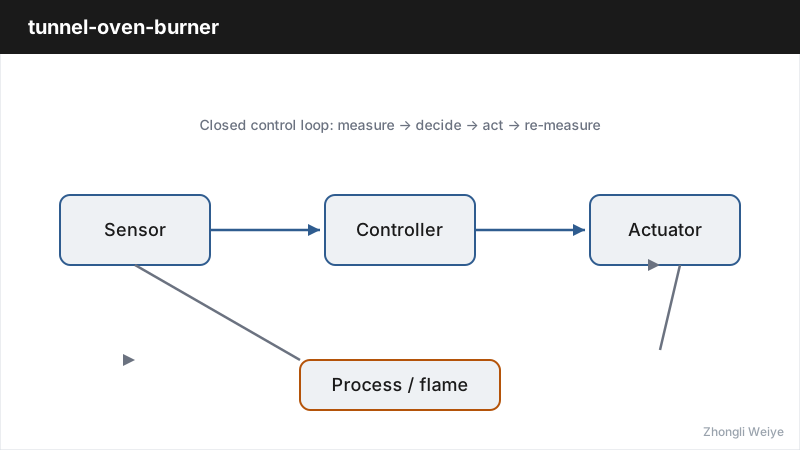
A tunnel is divided into zones, each with its own burner and thermocouple, so the profile can follow the process instead of averaging itself out. A coating that wants a gentle entry and a hotter soak gets a different setpoint in each zone, and the product meets that profile as it travels rather than sitting in one compromise temperature for the whole length. The alternative, a single setpoint across the tunnel, forces you to sacrifice one end or the other, and the sacrifice appears as inconsistent output rather than as an obvious fault.
Zone count follows from how much the profile actually varies, not from how many burners the oven has room for. A single-stage cure is often comfortable with two or three zones. A line that switches between product families needs more, because each family wants a different band at a different point in the tunnel. The burner controller arrangement has to sequence those zones on start-up and shut them down without leaving a gap in the profile, since an unlit zone in the middle of a cure is a cold spot moving through the load.
Air balance decides uniformity more than peak temperature
This is where most installations lose the argument with physics. Burners deliver heat; air movement decides where that heat ends up. Make-up air and exhaust have to be balanced against the firing rate, otherwise the band drifts along the length even while every zone controller is holding its setpoint correctly. Since the controllers measure their own thermocouple and know nothing about the neighbouring zone, a genuine air imbalance looks exactly like a setpoint problem from inside the control loop.
Uneven release along the tunnel is the usual root cause of under-cure at one end and over-cure at the other. Trim and burner arrangement decide this. Linear or ribbon burners spread heat more evenly than a point flame, and the fittings that set burner spacing and angle are what translate a burner rating into an even release pattern. Spacing that suits one product geometry will not suit another, so the same tunnel can be well balanced for one tray type and badly balanced for the next.
Follow line speed instead of assuming it
A tunnel profile is only valid at the speed it was tuned for. Change the conveyor speed and the residence time changes with it, so a profile that cured correctly at one speed can under-cure at another even though nothing about the oven has changed. Linking each zone to a control output that tracks line speed, rather than holding fixed setpoints, keeps the process tied to residence time and keeps a production change from silently becoming a process change.
Product mix matters as much as speed here. A heavier or wetter load entering the tunnel carries a different thermal load into the entry zones, so entry and exit are the two zones that respond most to what the line is actually carrying. A profile that works for one mix at one speed is a starting point, not a specification, and the entry zone is where that distinction shows up first as a longer soak than the recipe intended.
Recovery and pressure belong in the same conversation
Continuous tunnels run long enough for stack losses to matter, and where exhaust temperature is high enough, burner-side heat recovery pays back. It pays back without disturbing the cure profile only if the recovered air is brought in as trim rather than as a replacement for combustion air, since substitution changes the air-side balance the profile was trimmed against. Getting that balance wrong is a common cause of zone temperatures drifting after a recovery retrofit, and the heat recovery guide covers the routing in more detail.
Pressure control is not optional in a continuous enclosure. Holding the oven slightly negative keeps fumes moving in the intended direction instead of leaking into the building, and it stops exhaust recirculating back onto the burners, which is a direct contributor to uneven firing. A pressure switch lets you confirm and hold that condition, which is what makes the setting survive a shift change instead of drifting back to whatever the last person set it to.
A commissioning order that keeps problems visible
Commission in a sequence that keeps each fault attributable. Run the tunnel empty and trim every zone to its profile with no product in the way. Then introduce product at a steady line speed and re-check the entry and exit zones, because those respond most to load. Balance exhaust and make-up air last, once the profile already holds with real product, since balancing shifts the whole thermal picture and invalidates a trim done before it.
Once the line runs, log zone temperatures alongside product results. A tunnel that drifts slowly never announces itself within a single shift, and a trend across a few weeks is usually the only thing that catches a fouled burner or a failing thermocouple before it becomes scrap. The commissioning checklist is worth working through before production starts rather than during the first quality complaint.
Frequently asked questions
How many zones does a tunnel oven need? Enough to follow the profile the process actually requires. A single-stage cure is often comfortable with two or three zones, while a line running several product families needs more because each family wants a different temperature at a different point along the tunnel. Zone count should follow the profile rather than the available burner positions.
Why does my tunnel cure evenly at the ends but unevenly in the middle? Middle-of-tunnel variation usually points at air distribution rather than at the burners. Each burner can be holding its own setpoint while the air movement still favours some regions over others. Check exhaust and make-up balance and check burner spacing and trim before assuming the controllers have drifted.
What happens to the cure profile when line speed changes? Residence time changes, so a profile that worked at one speed no longer holds even though nothing about the oven has changed. That is why zone control is normally linked to line speed rather than left on fixed setpoints, otherwise production changes become process changes without anyone deciding to make one.
Does a tunnel oven need furnace pressure control? A continuous tunnel benefits from it. Holding the enclosure slightly negative stops fumes drifting into the building and stops exhaust recirculating back onto the burners, and that recirculated hot gas is a direct contributor to uneven firing. A pressure switch makes the condition confirmable rather than assumed.
Can heat recovery be added without changing the cure profile? It can, provided the recovered heat enters as trim air rather than replacing combustion air outright. If it substitutes for combustion air, the air-side balance changes and the profile has to be re-trimmed, which is why recovery and zoning are best commissioned together rather than one after the other.
What is the most common tunnel oven commissioning mistake? Trimming the zones with product already in the tunnel. A loaded tunnel hides air distribution problems, so a trim done under load looks correct on the day and drifts as soon as the product mix changes. Balance the air side last and re-check the entry and exit zones once real product is flowing.
Request a quote
If you have a tunnel profile, a line speed and an exhaust temperature to work from, send them over. It is the fastest way to get a burner and zoning arrangement sized against a real process rather than a generic chart. If your tunnel already runs and the issue is uniformity along its length, describing where in the tunnel the problem appears tells us more about the air side than any temperature figure would.
Related products
The burner and control parts a tunnel oven installation usually involves:
- gas burner range
- fuel oil burner range
- furnace pressure switch
- burner fittings
- burner universal controller
This guide covers Tunnel Oven Burners: Zoning, Recovery and the Cure Profile. For the exact part that fits your duty, send us the model plate photo and we confirm availability, lead time and a matched quotation.