
Combustion air is the half of the ratio nobody specifies. Fuel arrives in a pipe with a number attached to it, and the air that feeds it arrives through a fan, a filter and a length of duct where nobody put a label. That asymmetry is why so many burners run rich for years: the fuel side was engineered, and the air side was assumed.
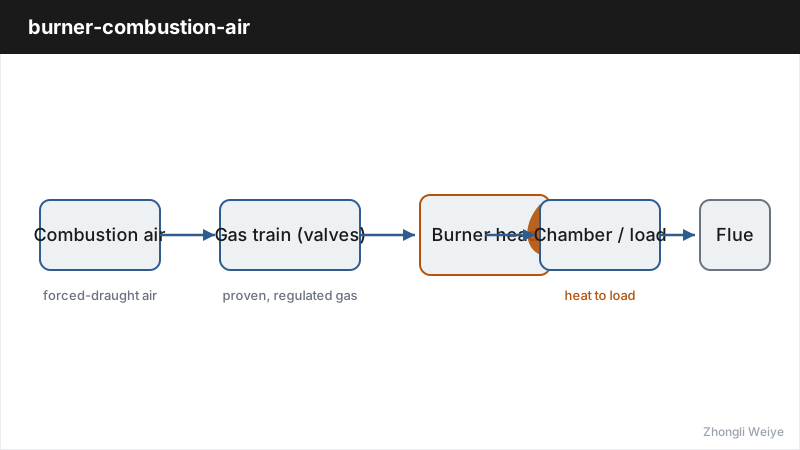
Air delivery is a system curve problem
A burner fan does not deliver a fixed volume of air. It delivers whatever volume the duct, the windbox and the burner port let through at the pressure the fan generates, and those two numbers move together. As the system restricts flow, the pressure the fan produces rises while the volume falls; open the damper and volume climbs while pressure drops. Neither figure is a property of the fan alone, which is why quoting a fan by volume without stating the pressure it delivers is an incomplete specification.
This matters when a burner is swapped for one with a different port design. The replacement may need a different static pressure to push air through its own burner head, and the existing fan and duct may not reach that point on the curve. The fuel connection can be identical and the air side can still prevent the burner reaching its output.
Primary and secondary air do different jobs
Not all the air a burner needs has to arrive mixed with the fuel. Primary air is the portion introduced at or near the nozzle, and its job is mixing: it gives the fuel stream the velocity and the local oxygen concentration needed for a flame to anchor and stay anchored. Secondary air is admitted further downstream, at the chamber wall or through the burner throat, and its job is completion: it finishes the burn of what the primary stage did not consume. Knowing which stage you are adjusting explains a lot of confusing observations. Closing primary air to trim the ratio moves the flame root and can extinguish it, because the mixing that sustains the flame is what you just reduced.
Restrictions upstream of the fan change everything downstream
The most common air-side fault is not a failed component but a slow accumulation. A filter blinds with dust, a duct develops a leak that pulls in recirculated flue gas rather than ambient air, and a windbox collects debris. In each case the fan response looks correct because the fan is doing exactly what it was told. What has changed is the air the burner is actually burning, and a recirculation leak is the more serious of the two because the burner keeps its fuel flow and simply receives worse air.
Air preheat changes the burner it is fitted to
Recovering heat from the flue and delivering it with the combustion air is good practice, and it is also a change to the burner that has to be engineered rather than inherited. Warm air changes flame temperature, changes the density the fan works against, and shifts how much oxygen is actually present for the same volumetric flow. A burner tuned on cold air will not stay tuned once the air is preheated, because the fan sees a different operating point and the flame sits in a different place relative to the port.
Two limits govern how far you can take it. The first is burner construction: some designs carry a manufacturer limit on inlet air temperature for ceramic, for seals and for the igniter. The second is emissions, since preheated air raises flame temperature and a duty that was comfortably inside its nitrogen oxide limit on cold air may need re-evaluating. The analysis behind that sits in our article on heat recovery burners.
What to measure before adjusting anything
The reason air drifts is that the fan keeps compensating. A burner that would run lean on reduced air simply runs the damper further open, so the flame looks acceptable and the flue analysis tells a different story. Measuring the flue is the only way to see the actual ratio, and the procedure for reading it properly is set out in our guide to air and fuel ratio tuning.
Two supporting measurements are worth adding to it. A duct pressure reading across the windbox tells you whether the fan is still reaching its operating point, and a filter differential tells you whether the inlet side has moved. Where the fan has slipped off its point on the curve, the damper actuator can only mask it by opening further.
Frequently asked questions
How much combustion air does a burner need? A fuel has a fixed mass of air required for complete combustion, and a burner is designed around that figure with a deliberate margin on the lean side. The margin is what keeps carbon monoxide at zero when the burner is slightly off its operating point, and it is the number the tuning exercise is really about.
What is primary air used for? Primary air is introduced at the nozzle and provides the mixing that anchors the flame. Reducing it changes where the flame sits and can destabilise combustion, so it is not the first control to reach for when trimming the ratio.
Why does a burner need more air at high fire than low fire? The amount of air needed scales with the fuel burned, and the volume the fan moves changes with burner output. If the fuel valve opens further while the damper position stays similar, the mixture goes rich at the top of the range. That is what a modulation curve corrects for.
Does air preheat change the burner tuning? Yes. Warm air changes flame temperature, changes the density the fan works against and shifts the mixing at the port, so a burner tuned on cold air needs the curve re-established rather than copied over.
How can I tell if a burner is getting enough air? Read the flue. A smoke-laden flame and an unusually low oxygen reading together indicate an air shortage, while a high oxygen reading with a clean flame usually indicates more air than the duty needs. Either way the measurement is on the air side, which is where the fault usually is.
What causes a burner to run rich after years of service? Most often a slow change in the air path: a filter loading up, a recirculation leak drawing flue gas into the inlet, or debris in the windbox. The fuel side rarely changes, so a burner that has drifted over a season usually points at the air path.
Request a quote
If a burner is running rich, hunting, or struggling to hold a flame on a fuel it used to manage, send the burner model, the fuel, the inlet air temperature and a current flue reading. Zhongli Weiye checks the selection against the duty and the air path and comes back with what the evidence supports.
Related products
The parts and product families referenced in this guide:
- industrial burner families
- windbox air damper drive
- air to fuel ratio tuning
- boiler burner efficiency
- flue gas measurement
This guide covers Burner Combustion Air: The Forgotten Half of the Ratio. For the exact part that fits your duty, send us the model plate photo and we confirm availability, lead time and a matched quotation.